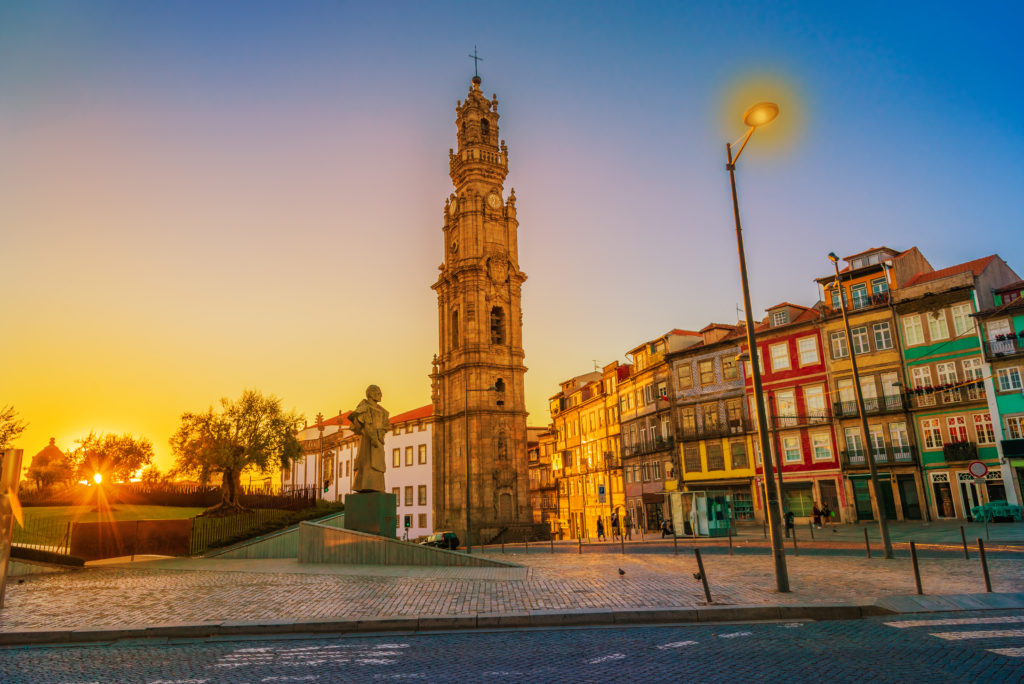
Downtown Porto, known as Baixa, is the vibrant heart of the city, centered around Avenida dos Aliados, offering historic squares like Praça da Liberdade, iconic landmarks such as the Clerigos Tower and Lello Bookstore, bustling shopping streets like Rua de Santa Catarina, and lively nightlife, all while being the gateway to the UNESCO-listed Ribeira district by the Douro River.
Although its limits are not formally marked out, we will call the center of Porto the area including Cordoaria, Praça da Liberdade (Aliados) and São Bento Station. This perimeter also includes important streets of Porto such as Rua Santa Catarina and Rua de Cedofeita. Going up a bit from the São Bento Station, you will find the Sé neighborhood, which is one of the oldest and most traditional in Porto. Here you can visit the Porto Cathedral and a surviving section of the medieval city wall, called Muralha Fernandina. The views over the river from here are eye-catching. Cedofeita is the favorite neighborhood of many locals as well as visitors to the city. It is characterized by a younger atmosphere, new cafes and restaurants. A neighborhood full of art, design, alternative proposals, and emerging young creative artists. Its is not by chance that most of Porto’s Art Galleries are located here. This is a guide to exploring Porto’s Historic downtown area.
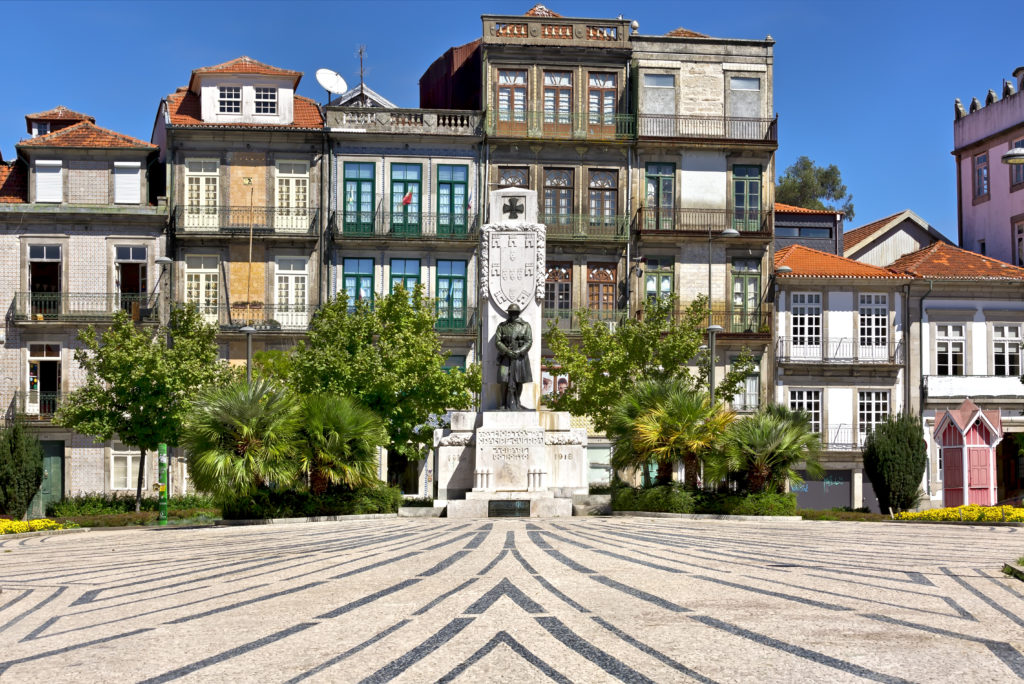
History of Porto’s Historic Downtown
Ancient Origins- Portus Cale
Porto’s historic downtown sits on one of the oldest continuously inhabited urban sites in Portugal. The city’s early name, Portus Cale, is the root of the word Portugal itself. This early settlement grew around the Douro River, where Phoenician and Celtiberian traders interacted with local populations as early as the first millennium BCE.
Key idea: Downtown Porto begins as a river‑trade outpost that eventually lends its name to an entire nation.
Medieval Foundations — Sé, Walls, and Ribeira
By the Middle Ages, Porto’s downtown crystallized into a fortified hilltop (Sé) and a bustling riverside quarter (Ribeira).
The Fernandina Wall, built in the 14th century, enclosed much of what is now the historic center.
Defining features of this era:
- Sé Cathedral becomes the city’s spiritual and defensive anchor
- Ribeira evolves into a dense maze of alleys, workshops, and merchant houses
- Miragaia, Vitória, São Nicolau, and Sé form the core medieval parishes
Key idea: Porto’s downtown becomes a compact, fortified medieval city defined by trade, religion, and river commerce.
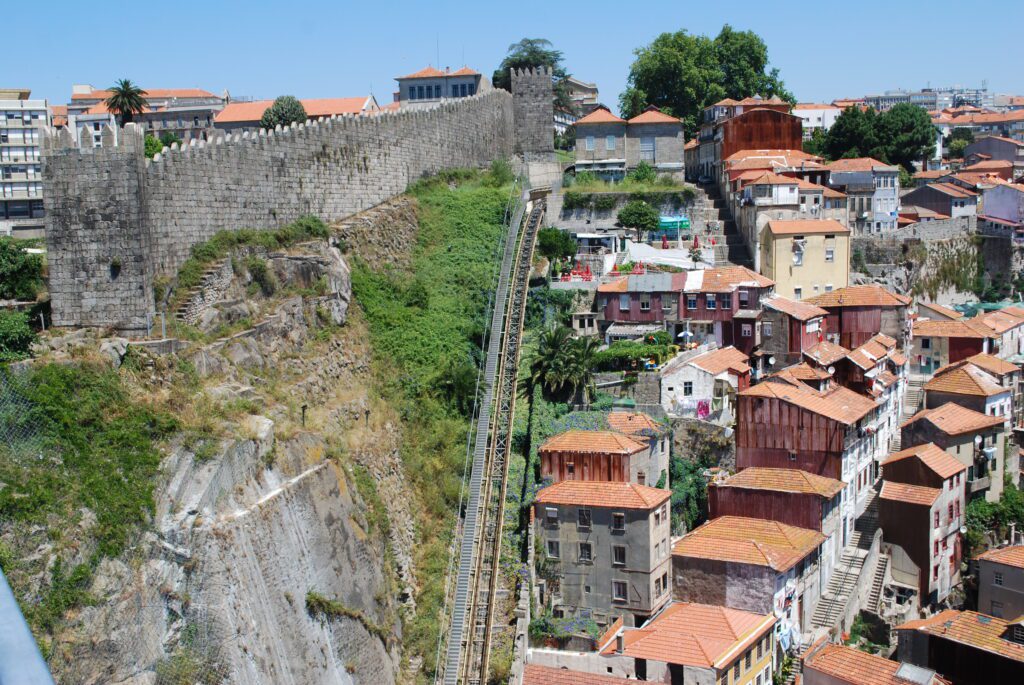
The Mercantile Golden Age — Douro Trade & Port Wine
From the 14th to 18th centuries, Porto’s downtown thrives as a commercial powerhouse.
Ribeira’s quays become the loading point for goods from the Douro Valley, especially wine.
This era sets the stage for the rise of Port wine, whose cellars later dominate the opposite bank in Gaia.
Key idea: Downtown Porto becomes the beating heart of a global wine economy.
18th–19th Century Urban Transformation — Civic Identity Emerges
As Porto grows wealthier, Baixa (downtown) undergoes major modernization:
- New civic buildings
- Broader streets
- Neoclassical and Beaux‑Arts architecture
- The rise of Avenida dos Aliados as the city’s civic boulevard
This period blends medieval density with modern ambition, creating the layered architectural identity visible today.
Key idea: Baixa becomes Porto’s “public face,” projecting confidence and modernity.
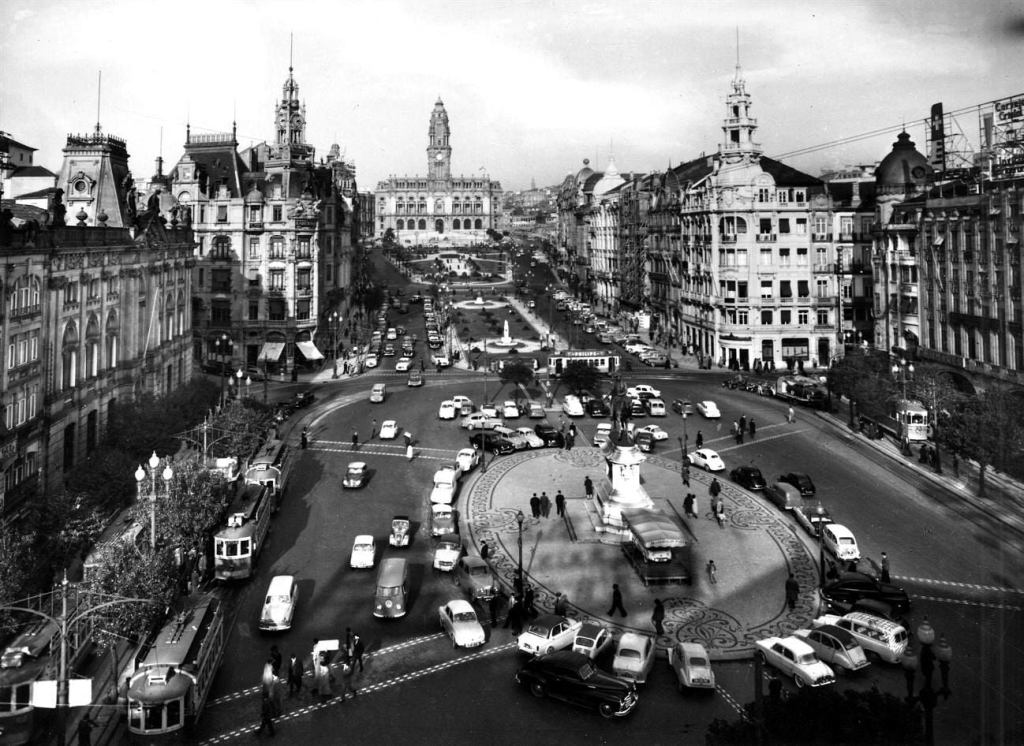
Early 20th Century — São Bento & Industrial Momentum
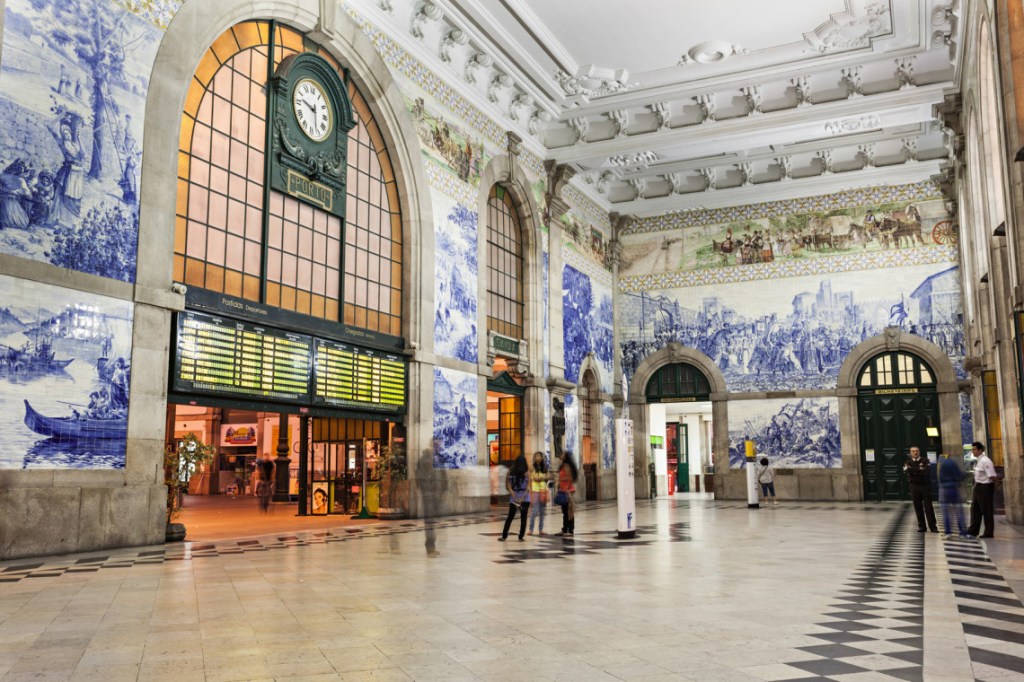
The opening of São Bento Station, decorated with over 20,000 azulejos depicting Portuguese history, becomes a defining moment in downtown Porto’s identity.
Industrialization accelerates:
- Tram lines
- Iron bridges
- Warehouses and factories
- A growing working‑class population in Ribeira and Miragaia
Key idea: Downtown Porto becomes a hybrid of industrial energy and artistic storytelling.
Late 20th Century — Decline, Preservation, and UNESCO Recognition
By the mid‑20th century, Ribeira and parts of Baixa face economic decline and depopulation.
However, the area’s cultural and architectural value leads to a major turning point:
In 1996, Porto’s Historic Centre is designated a UNESCO World Heritage Site, covering Sé, Vitória, São Nicolau, Miragaia, and the wine lodges across the river.
This recognition sparks:
- Restoration of façades
- Revitalization of public squares
- Preservation of medieval street patterns
- Renewed cultural tourism
Key idea: UNESCO status transforms downtown Porto from a fading district into a protected cultural treasure.
21st Century — Reinvention & Cultural Renaissance
Today, Porto’s historic downtown blends:
- Medieval street grids
- Baroque churches
- 19th‑century civic architecture
- Contemporary cafés, galleries, and cultural venues
It remains a living district — not a museum — where centuries of urban evolution coexist.
Key idea: Downtown Porto becomes a model of urban resilience, balancing heritage with reinvention.
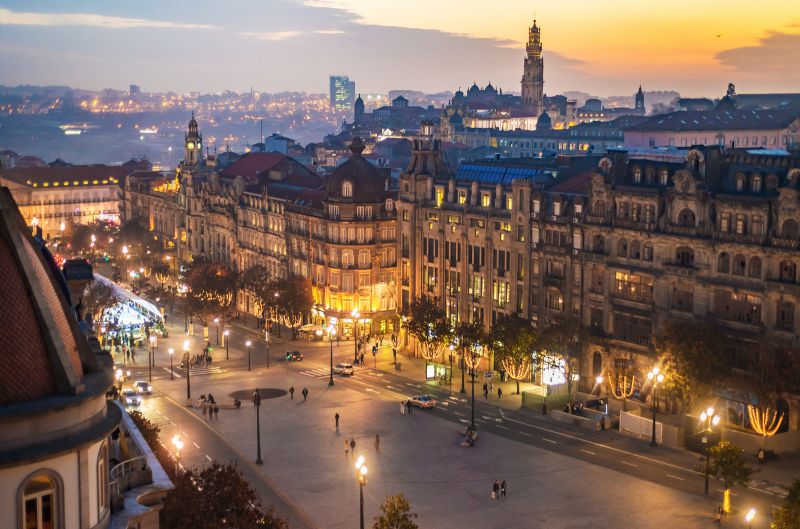
Porto’s historic downtown is a layered urban palimpsest — from ancient Portus Cale to medieval Ribeira, from mercantile powerhouse to UNESCO‑protected cultural core — continually reinventing itself while preserving the textures of its past.
Porto’s Civic Spine
Porto’s Civic Spine (Avenida dos Aliados) and Its Key Attractions
Avenida dos Aliados is the ceremonial axis of Porto — the boulevard where the city expresses its civic identity, architectural ambition, and public life. It’s often described as Porto’s “living room” and the symbolic heart of the downtown core.
Porto City Hall (Câmara Municipal do Porto)
Theme: Civic Power + Architectural Monumentality
- Dominates the northern end of Aliados with a neoclassical façade and a 70‑meter tower offering panoramic views.
- Built in the early 20th century as part of Porto’s modernization push, replacing older medieval districts with a grand civic axis.
- Acts as the “crown” of the avenue — the symbolic anchor of Porto’s municipal authority.
Why it matters:
This is the apex of Porto’s civic identity arc — the architectural equivalent of a franchise’s bold rebrand.
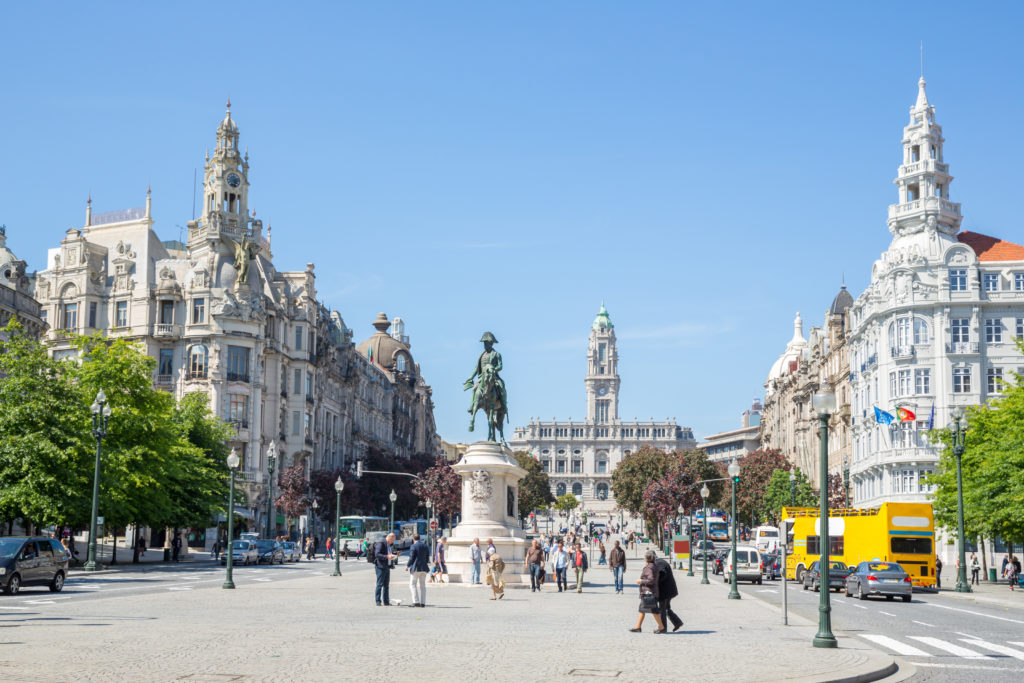
Praça da Liberdade (Liberty Square)
Theme: Historic Continuity + Urban Transition
- The southern end of the Civic Spine, connecting Aliados to the medieval heart of the city.
- Features a statue of King Pedro IV, symbolizing liberalism and national unity.
- Historically the city’s main civic square, now functioning as the hinge between Baixa and São Bento.
Why it matters:
It’s the “transition zone” where Porto’s medieval past meets its modern civic expression.
The Grand Hotels & Beaux‑Arts Buildings
Theme: Urban Prestige + Early 20th‑Century Modernization
Avenida dos Aliados is lined with monumental buildings from the early 1900s, many originally banks, insurance companies, or luxury hotels.
Search results highlight the avenue’s architecturally impressive buildings housing cafés, hotels, and boutiques.
Key façades to notice:
- Granite and marble cladding
- Mansard roofs
- Sculptural ornamentation
- Wide, symmetrical frontages
Why it matters:
This is Porto’s “confidence era,” when the city projected itself as a modern European capital.
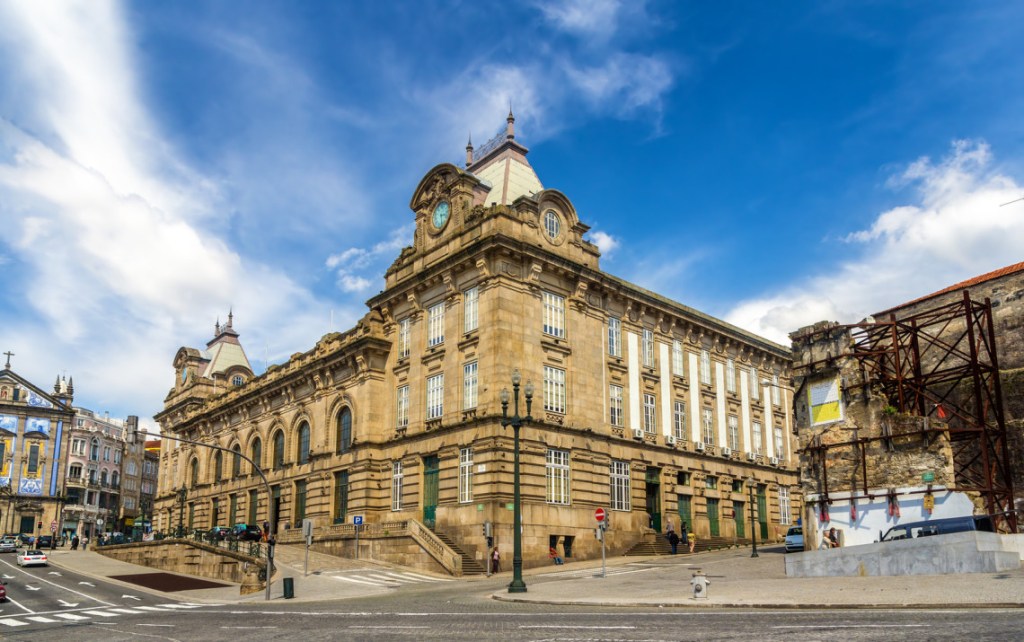
São Bento Station (just steps away)
Theme: Memory + Mobility
While technically just off the Civic Spine, São Bento is inseparable from it.
Search results emphasize its proximity — less than 300 yards from Aliados.
Key features:
- 20,000+ azulejos depicting Portuguese history
- A monumental entrance hall
- A living commuter hub
Why it matters:
It’s Porto’s “memory palace,” feeding directly into the civic boulevard.
Historic Cafés (Guarany, Café Imperial / McDonald’s Imperial)
Theme: Cultural Memory + Everyday Rituals
- Guarany Café (1933): A classic Art Deco café known for its indigenous‑themed interior and role as a cultural meeting point.
- Café Imperial (now McDonald’s): Often called the most beautiful McDonald’s in the world, with chandeliers and stained glass preserved from the original café.
Why it matters:
These cafés are “micro‑arenas” of Porto’s social life — where daily rituals meet architectural heritage.
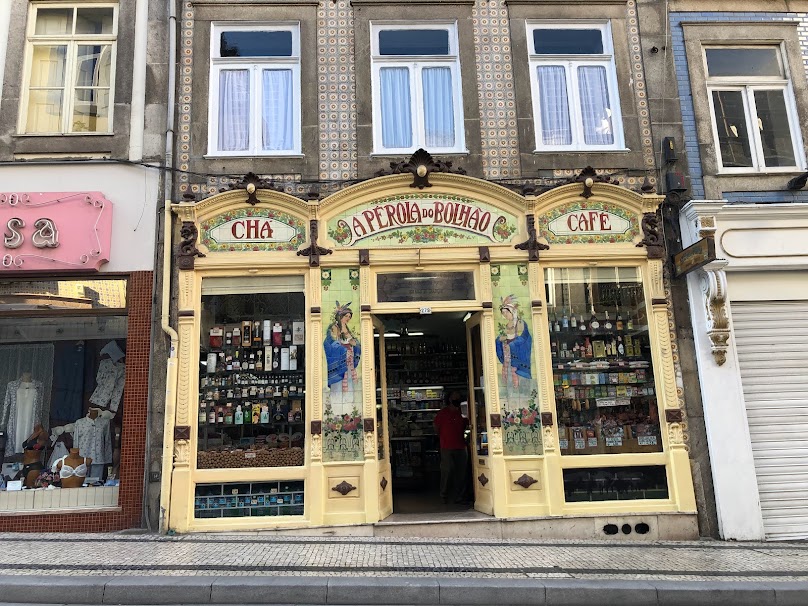
Shops, Boutiques, and Terraces
Theme: Public Life + Urban Texture
Aliados is filled with:
Cafés
Bars
Restaurants
Hotels
Terraces shaded by tall trees
These spaces animate the boulevard and make it a stage for everyday life.
Why it matters:
This is the “human‑scale layer” that keeps the Civic Spine alive beyond its monumental architecture.
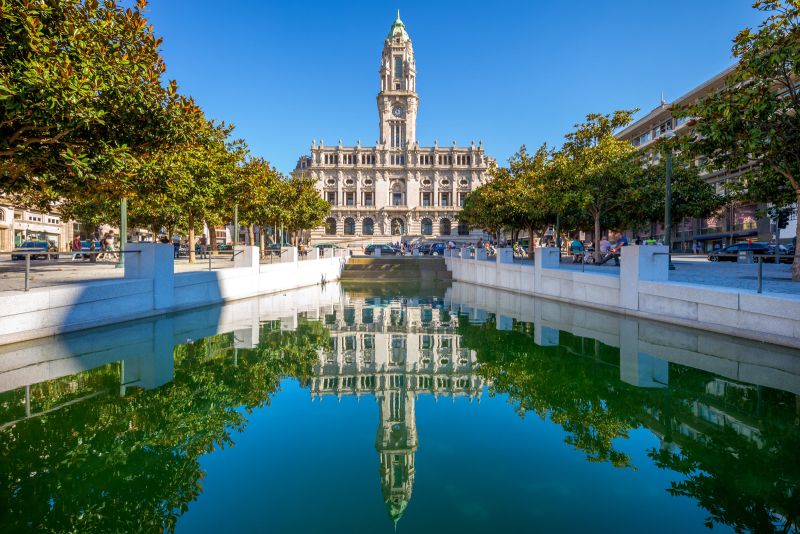
Porto’s Civic Spine is a grand urban corridor where architecture, civic power, cultural memory, and everyday life converge — a living symbol of the city’s evolution from medieval port to modern metropolis.
Clergios Tower & Church
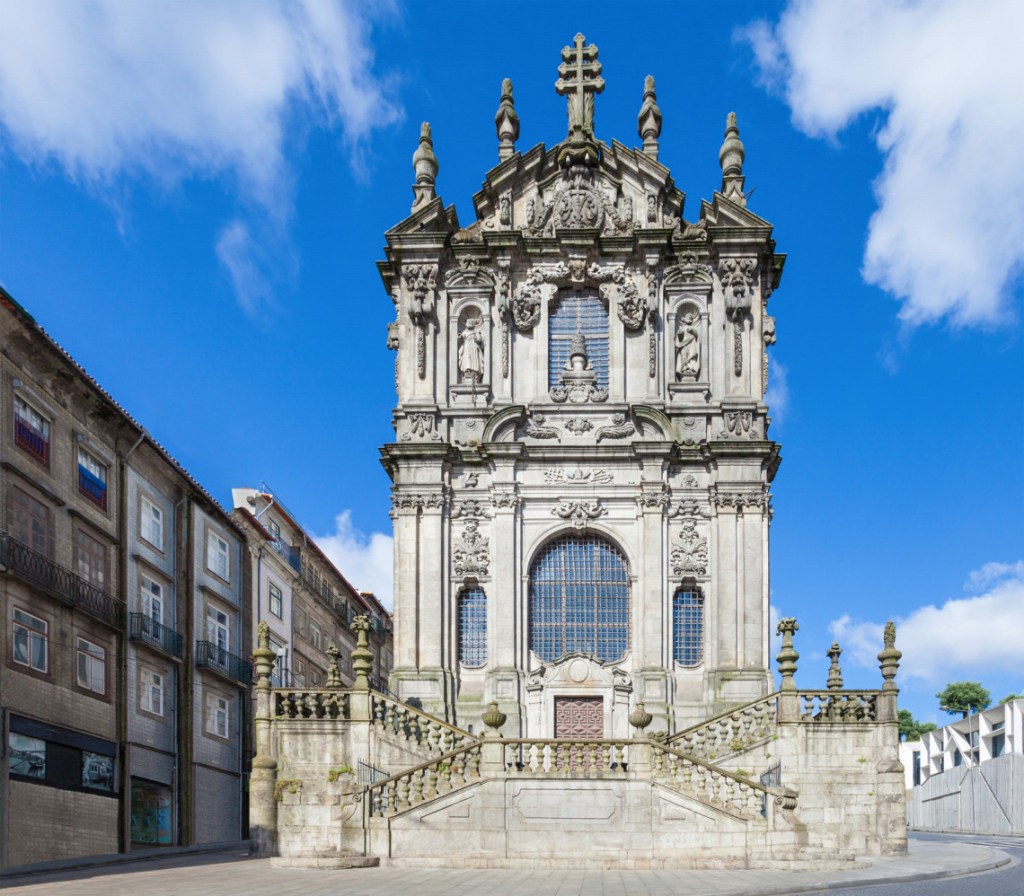
Clérigos Church (Igreja dos Clérigos)
Baroque drama, urban symbolism, and the signature of Nicolau Nasoni
- The church was built between 1732 and 1750 for the Brotherhood of the Clérigos, a religious confraternity of clergymen.
- Designed by Nicolau Nasoni, the Italian architect whose work defines much of Porto’s 18th‑century identity.
- The façade is a classic example of Portuguese Baroque — dynamic curves, sculptural ornamentation, and a theatrical sense of movement.
- Inside, the decoration reflects the expressive exuberance of the Baroque style, emphasizing verticality and spiritual drama.
Narrative layer:
This is Porto’s “Baroque heartbeat” — the moment when the city embraces an architectural language of grandeur and emotional intensity.
Clérigos Tower (Torre dos Clérigos)
Porto’s skyline signature and its most recognizable symbol
- Completed in 1763 as part of the church complex.
- Stands 75 meters tall, making it one of the tallest bell towers in Portugal and visible from across the city.
- Visitors climb roughly 200–225 steps to reach the top, where the tower offers one of the best 360º panoramic views of Porto and the Douro River.
- Its slender silhouette and granite construction make it a defining element of Porto’s skyline — the city’s “vertical exclamation point.”
Narrative layer:
The tower is Porto’s “identity beacon” — a structure that announces the city’s presence long before you reach it.
The Clérigos Museum
A quieter but essential part of the complex
- Houses the artistic and cultural heritage of the Brotherhood of the Clerics, including religious art, vestments, and historical documents.
- Also highlights the life and work of Nicolau Nasoni, whose influence on Porto is profound.
Narrative layer:
The museum is the “lore archive” — the backstory that gives the tower and church their meaning.
Urban Significance
Why Clérigos matters in Porto’s downtown story
- The tower dominates the skyline and acts as a navigational anchor for the historic center.
- Its location near Cordoaria, Vitória, and the Baixa/São Bento axis makes it a hinge between Porto’s medieval core and its 18th‑century expansion.
- Architecturally, it marks the moment when Porto shifts from medieval density to Baroque theatricality.
Narrative layer:
Clérigos is the “pivot chapter” in Porto’s architectural evolution — the point where the city begins to look upward, outward, and more cosmopolitan.
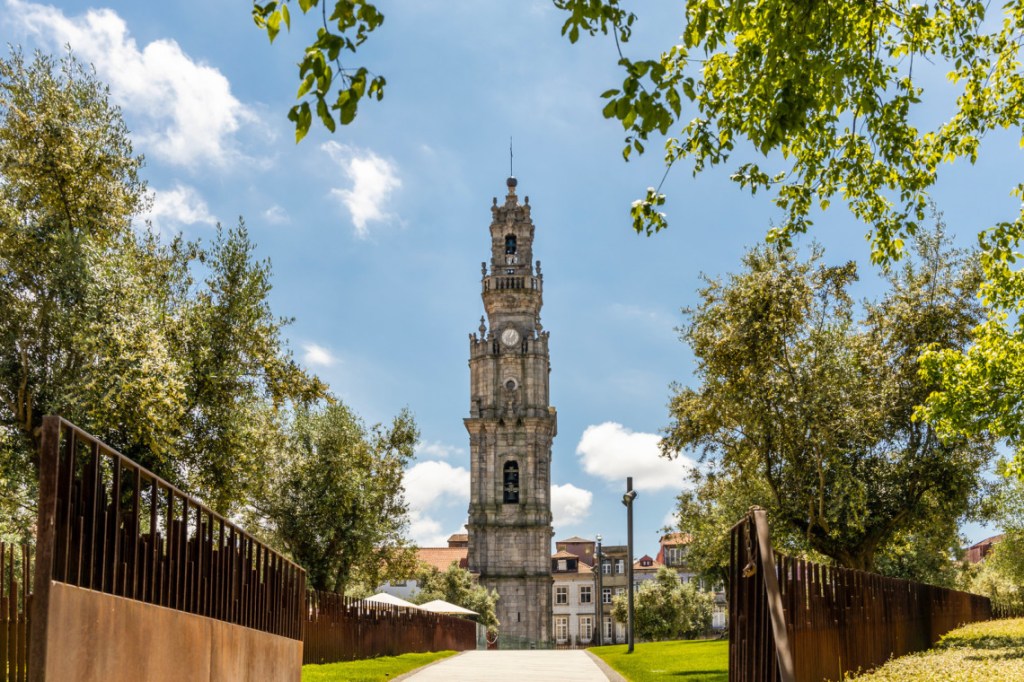
Clérigos Tower and Church form Porto’s most iconic Baroque ensemble — a fusion of Nasoni’s artistic genius, the city’s religious heritage, and a skyline‑defining tower that has symbolized Porto since 1763.
Livraria Lello — Porto’s Neo‑Manueline Literary Icon
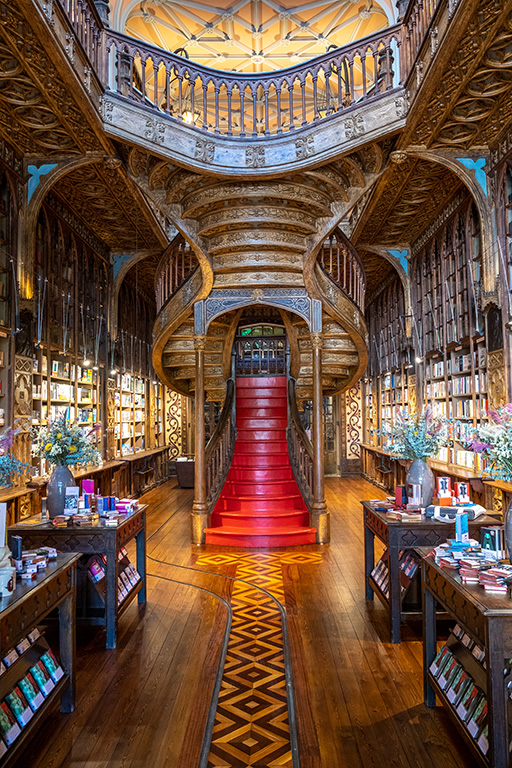
Livraria Lello isn’t just a bookstore — it’s one of Porto’s most symbolic cultural landmarks, a fusion of architecture, publishing history, and myth‑making. It sits right in the historic downtown, near Clérigos Tower, and has become a global destination for readers, architects, and travelers.
Origins & Early History (1881–1906)
- The bookstore traces its roots to Livraria Chardron, founded in the 19th century and later acquired by the Lello brothers.
- The modern building opened in 1906, inaugurated by José and António Lello, passionate bibliophiles who wanted a grand literary house for Porto.
- It quickly became a hub for writers, intellectuals, and publishers.
Narrative layer:
This is Porto’s “literary renaissance chapter,” when the city asserts itself as a cultural capital.
Architecture — Neo‑Manueline + Art Nouveau Fusion
Designed by Francisco Xavier Esteves, the building is a masterpiece of Neo‑Manueline architecture, a style inspired by Portugal’s Age of Discoveries.
Key architectural features:
- Ornate stone façade with Gothic and Manueline motifs
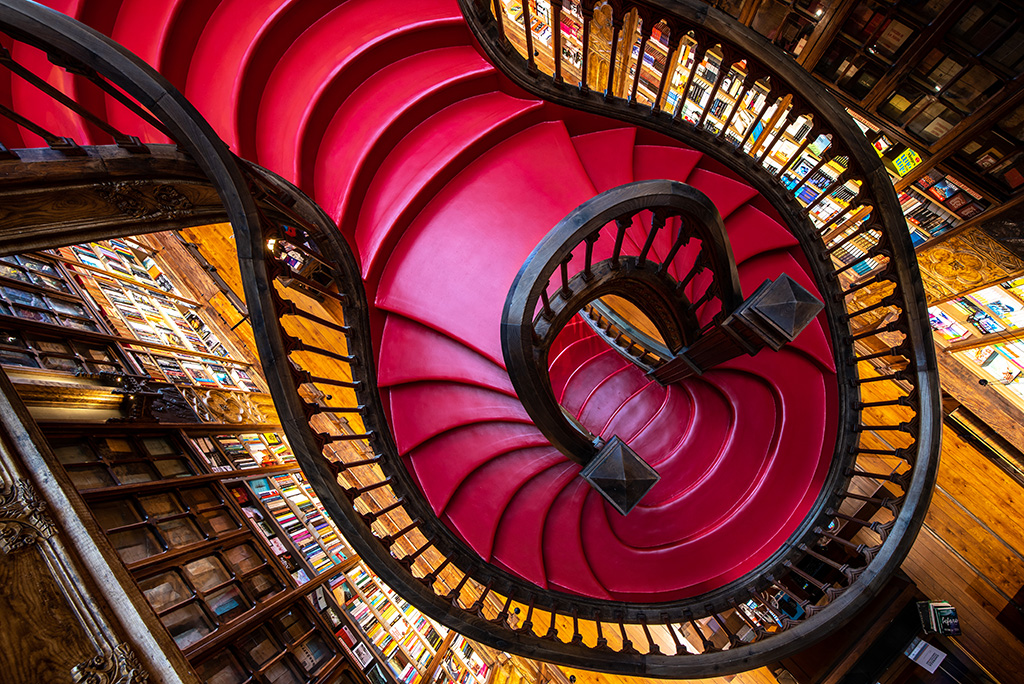
- A sweeping red staircase that spirals like a sculpted ribbon
- A stained‑glass skylight bearing the Lello motto: “Decus in Labore”
- Carved wooden shelves and decorative flourishes that create a dreamlike interior
Narrative layer:
The architecture feels like a “portal” — a threshold between the real city and a literary imagination.
Lello as a Publisher — The Trackway System
From 1906 to the early 1990s, Livraria Lello operated as a major publisher.
A trackway and transport trolley moved books from the basement warehouse to the shop floor — a system still visible today as part of the museum‑like interior.
Narrative layer:
This is the “industrial backbone” of the bookstore — the hidden machinery behind the magic.
Cultural Mythology — The Harry Potter Connection
While not confirmed as a direct inspiration, the bookstore’s fantastical interior has long been associated with J.K. Rowling’s time in Porto, fueling global fascination.
This connection helped transform Lello into one of the most visited bookstores in the world.
Narrative layer:
This is the “myth‑making era,” when Livraria Lello becomes a global cultural icon.
Modern Era — Restoration & Global Fame
Today, Livraria Lello is:
- A protected architectural landmark
- A curated literary space
- A museum of its own publishing history
- One of the world’s most photographed bookstores
Its blend of history, architecture, and storytelling makes it a cornerstone of Porto’s downtown identity.
Narrative layer:
This is the “legacy chapter” — Lello as a symbol of Porto’s cultural resilience and reinvention.
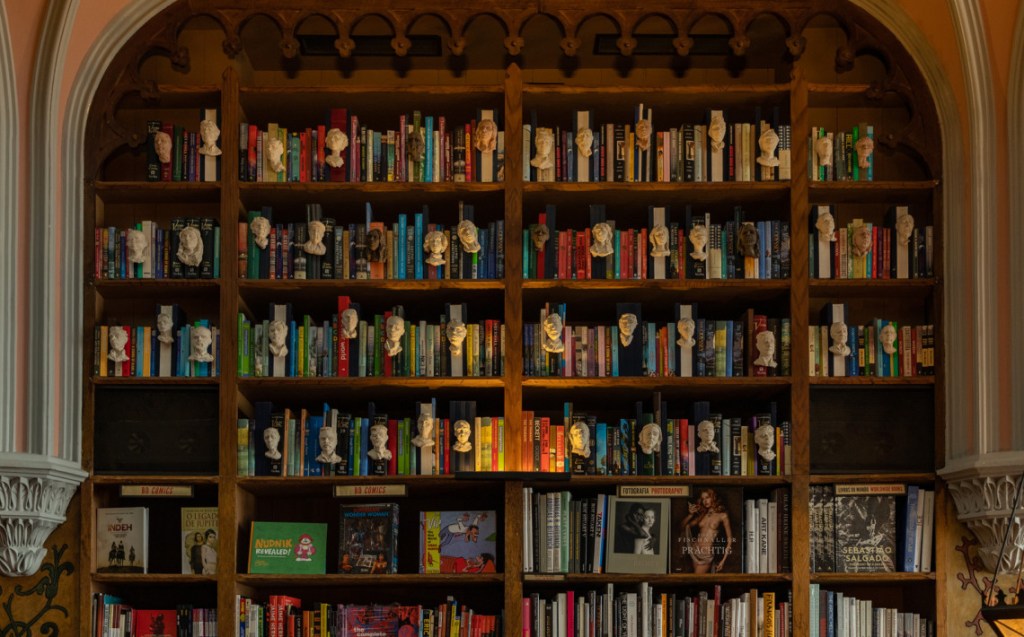
Livraria Lello is a neo‑Manueline masterpiece where Porto’s literary heritage, architectural artistry, and global cultural mythology converge — a living icon that has shaped the city’s identity for over a century.
Sé Cathedral & the Episcopal District — Porto’s Origin Point
Climb toward the Sé and you’re walking into the city’s earliest layers: Romanesque foundations, Gothic expansions, Baroque interventions.
What to look for
- The cathedral’s fortress‑like stance — a reminder that Porto grew under constant threat
- The cloister’s azulejos, which act like a visual archive
- The terrace view, where the Douro valley opens like a narrative prologue
Narrative overlay: This is Porto’s “foundational myth” district — the equivalent of a franchise’s inaugural season.
Sé Cathedral (Porto Cathedral)
Porto’s fortress‑church and the anchor of its medieval identity
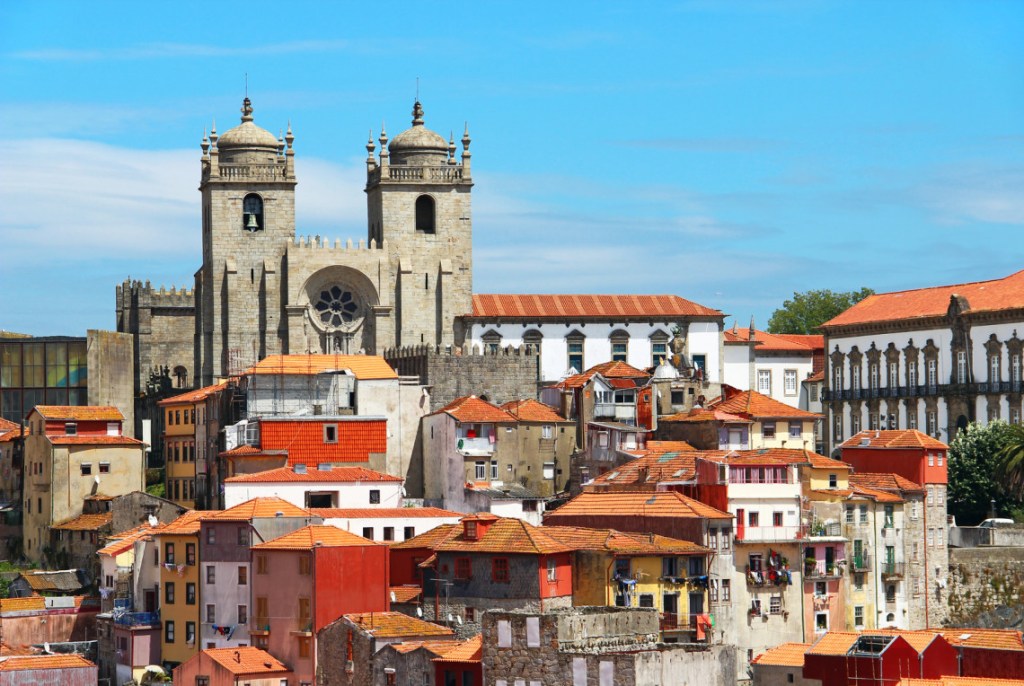
The Sé Cathedral is one of Porto’s oldest and most important monuments, with construction beginning in the 12th century and evolving across Romanesque, Gothic, and Baroque phases.
Origins & Architecture
- Groundbreaking: around 1110
- Initial style: Romanesque, visible in the heavy walls and fortress‑like exterior
- Later additions:
- Gothic funerary chapel and cloister (14th century)
- Baroque renovations in the 17th–18th centuries
The cathedral’s defensive appearance — battlements, thick granite, narrow openings — reflects Porto’s medieval need for protection.
Interior & Cloister
- The nave’s height and columns create a sense of monumental verticality
- The cloister, decorated with azulejos depicting religious scenes, is one of the cathedral’s most beautiful features
- The cathedral’s terrace offers sweeping views over the Douro and the city’s medieval fabric

Symbolic Role
The Sé is the episcopal seat of Porto, historically as important as Lisbon’s cathedral.
It stands at the highest point of the old city, marking the birthplace of Porto’s urban development.
The Episcopal District (Paço Episcopal + Surroundings)
The political, religious, and administrative heart of medieval Porto
The Episcopal District surrounds the cathedral and includes the Paço Episcopal (Bishop’s Palace), medieval streets, terraces, and the old urban core.
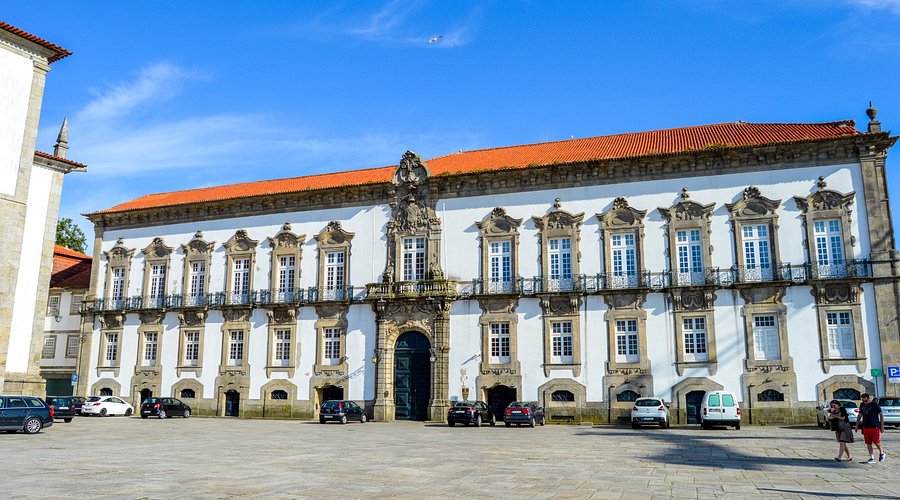
Bishop’s Palace (Paço Episcopal)
- A monumental Baroque palace adjacent to the cathedral
- Historically the residence and administrative center of Porto’s bishops
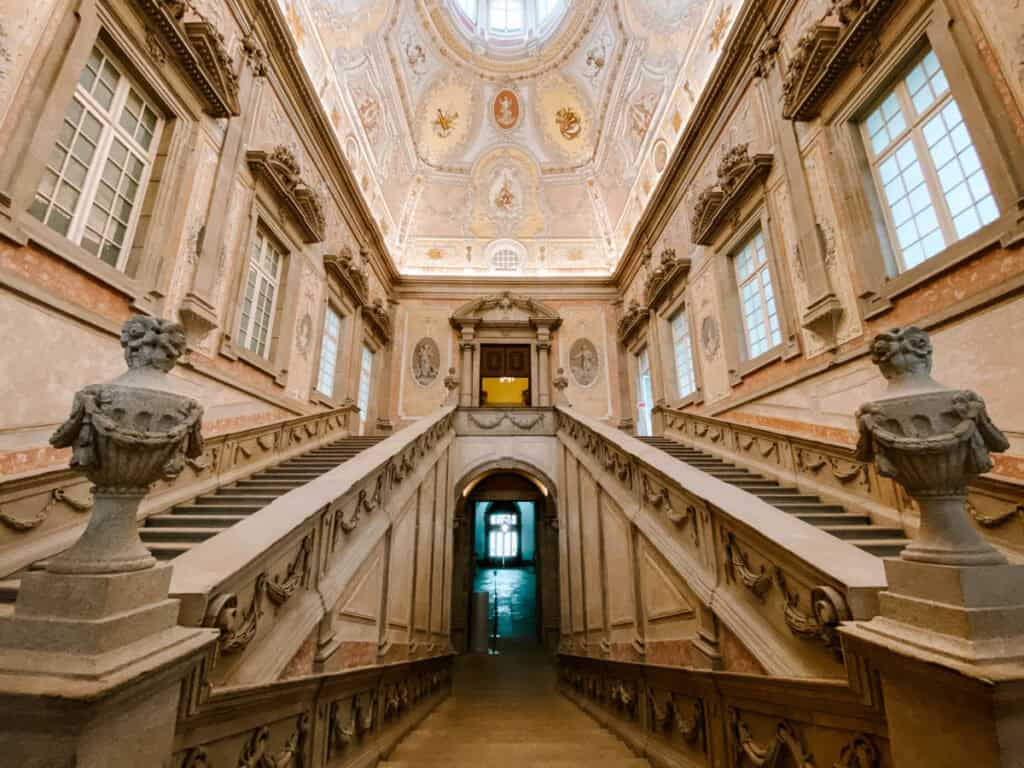
- Known for its grand staircase, ornate halls, and panoramic views over Ribeira and Gaia
- The palace forms a dramatic architectural ensemble with the cathedral, dominating the skyline
Medieval Urban Fabric
The district preserves:
- Narrow stone lanes
- Terraced viewpoints
- Houses built into the hillside
- The original street network that connected the cathedral to Ribeira
This is the oldest continuously inhabited zone of Porto — the city’s “origin point.”
Strategic Importance
Because of its elevation and fortification, the Episcopal District served as:
- A defensive stronghold
- A religious power center
- A political hub during medieval conflicts and royal visits
It was the commanding acropolis of Porto.
Why This Area Matters in Porto’s Story
The Sé Cathedral and Episcopal District form the core of Porto’s historical identity:
- The religious heart (episcopal seat)
- The political center (Bishop’s Palace)
- The urban origin (first settlement plateau)
- The symbolic high point overlooking the Douro
This is where Porto’s story begins — the “Season 1, Episode 1” of the city’s urban narrative.
The Sé Cathedral and Episcopal District are Porto’s ancient acropolis — a fortified religious and political center whose Romanesque roots, Gothic additions, and Baroque flourishes tell the story of the city’s evolution from medieval stronghold to modern metropolis.
Why Explore Porto’s Historic Downtown?
Downtown Porto (Baixa) is described as a lively center of commerce and culture, filled with activities, architecture, and energy that appeal to every type of traveler. This is where Porto’s civic identity is most visible — the “franchise identity corridor” of the city. The historic center sits on steep hills overlooking the Douro, creating dramatic viewpoints from the Sé terrace, Miragaia slopes, and Ribeira waterfront. Porto’s downtown is visually cinematic — a natural stage for storytelling and exploration. Porto’s historic downtown is the emotional, architectural, and cultural core of the city — a place where centuries of urban evolution are still visible in the streets, façades, and riverfront. Porto’s downtown is compact and easy to explore on foot, with layers of history visible at every turn.
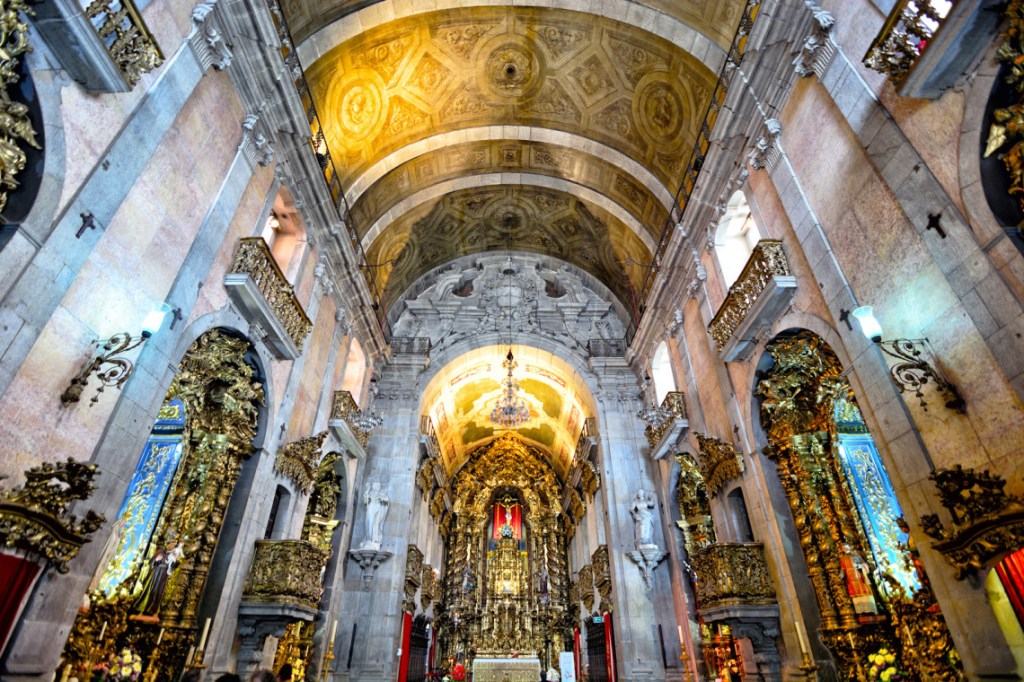
Travel guides emphasize its walkability, charm, and old‑world architecture. You explore Porto’s historic downtown because it’s the city’s living core — a UNESCO‑protected tapestry of medieval streets, Baroque monuments, riverfront life, and cultural energy that captures everything Porto is known for.
 Hockeywiztravelsblog
Leave a comment